2025-12-16_China-Travel-2025–A-Malaysian-s-Guide-to-Surviving-the-Cashless-Great-Wall-1015675d9074
Heading to China soon? Leave the thick stack of RMB notes at home. Here is exactly how to pay for your dim sum, Didi rides, and shopping…
China Travel 2025: A Malaysian’s Guide to Surviving the Cashless Great Wall
Heading to China soon? Leave the thick stack of RMB notes at home. Here is exactly how to pay for your dim sum, Didi rides, and shopping using your Malaysian eWallets.
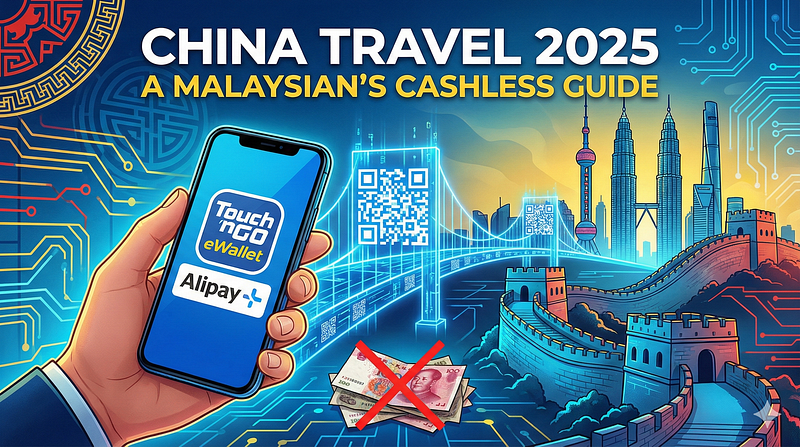
Created by Author via Gemini
If you are a Malaysian planning a trip to China, you have likely heard the rumors: “China doesn’t use cash anymore” or “You can’t survive without WeChat Pay.”
While the digital landscape in China is vastly different from Malaysia, the good news is that in 2025, it is easier than ever for Malaysians to pay like a local. You don’t need a Chinese bank account, and you don’t even need to speak Mandarin to make a payment.
Here is the comprehensive breakdown of payment methods for Malaysians in China, specifically analyzing Touch ‘n Go eWallet, Alipay, and the reality of Cash.
1. The Reality of Cash (RMB)
Status: Legally accepted, practically annoying.
Let’s get this out of the way first. Is cash dead in China? No. By law, merchants must accept cash. However, the reality on the ground is different.
While big supermarkets and hotels will take your notes, taxi drivers and small bao sellers often genuinely do not have small change. If you pay with a 100 RMB note for a 5 RMB drink, you might be met with a confused stare or a refusal because they literally have no coins to give you back.
The Verdict: Bring about RMB 300–500 in cash for emergencies or when technology fails. Do not rely on it as your primary way to spend.
2. Touch ‘n Go eWallet (Your Primary Weapon)
Status: The most convenient method for Malaysians.
Thanks to the Alipay+ partnership, your Touch ‘n Go (TNG) eWallet works in China straight out of the box.
Do I need to activate anything?
No. As long as your TNG account is Verified (eKYC completed), the app automatically detects you are in China. When you tap “Pay” or “Scan,” it interacts with the Alipay network seamlessly.
The “Merchant vs. Personal” Trap
This is the most critical thing to understand. TNG eWallet works perfectly with Merchant Accounts (Blue Alipay QR codes). This covers 90% of your trip:
- Convenience stores (Lawson, FamilyMart)
- Malls and restaurants
- Subway (Metro) stations
- KFC/McDonalds
However, TNG often fails with Personal Accounts. In China, many small roadside hawkers and taxi drivers use their personal QR codes to receive money (similar to a personal DuitNow transfer). Because of cross-border regulations, TNG cannot transfer to these personal individual accounts.
Fees & Charges: The Breakdown
Many Malaysians are worried about hidden fees. Here is how it works with TNG:
- The Exchange Rate Spread (~1%): TNG does not charge a separate “transaction fee” on the receipt. Instead, the fee is built into the exchange rate. It is typically around 1% higher than the market spot rate. It’s a convenience fee, and it’s generally very fair.
- The Reload Trap: This is where you lose money.
- If you reload your TNG wallet using a Credit Card, TNG charges a 1% reload fee.
- The Fix: Always reload your TNG wallet using DuitNow (Bank Transfer) or a Debit Card. These are free.
Pro Tip: Reload a large amount via DuitNow before you board your flight.
3. The Alipay App (The Essential Backup)
Status: Necessary for when TNG fails.
Even if you love TNG, you must download the actual Alipay App (International Version).
Why do I need this if I have TNG?
Remember the “Personal QR” issue mentioned above? The native Alipay app is much better at handling those small vendors and taxi drivers that TNG rejects.
How to set it up:
- Download Alipay from the App Store/Play Store.
- Register with your Malaysian phone number (+60).
- Go to “Bank Cards” and add your Malaysian Credit or Debit Card (Visa/Mastercard).
The “200 RMB” Rule
Alipay charges different fees depending on how much you spend in a single transaction:
- Transaction under RMB 200: 0% Fee. (You only pay your bank’s exchange rate).
- Transaction over RMB 200: 3% Fee. (Charged by Alipay).
The Strategy: Use the Alipay App for small purchases (street food, cheap taxis) to enjoy the 0% fee. Use TNG for larger purchases to avoid the 3% Alipay surcharge (since TNG stays steady at roughly 1% spread regardless of amount).
4. Direct Credit Card Usage
Status: The “High Roller” method.
Don’t expect to whip out your Visa payWave at a local noodle shop. Direct credit card acceptance in China is low. It is generally restricted to:
- 5-Star Hotels
- High-end luxury retail (Gucci, LV)
- Some western chains (Starbucks, Uniqlo)
If you use your card directly, your Malaysian bank will likely charge the standard 1%–2% cross-border fee. It’s reliable where accepted, but don’t count on it for daily survival.
Summary: The Winning Strategy
To save the most money and avoid awkward moments at the cashier, follow this hierarchy:
Step 1: Try to pay with Touch ‘n Go eWallet first. It’s easy, tracks in Ringgit, and has a fixed low cost.
- Warning: Ensure you reload via DuitNow to avoid the 1% credit card reload fee.
Step 2: If TNG fails (or the vendor uses a Personal QR), switch to the Alipay App (linked to your card).
Step 3: Keep RMB 300 in your pocket just in case your internet dies or the machine breaks.
Safe travels! China is an amazing, futuristic experience — once you figure out how to pay for it.