2025-04-08_Smart-vs–Traditional-Home-Appliances–Is-DIY-Repair-the-Key-to-Saving-Money-and-the-Planet–f1407c4fb9ed
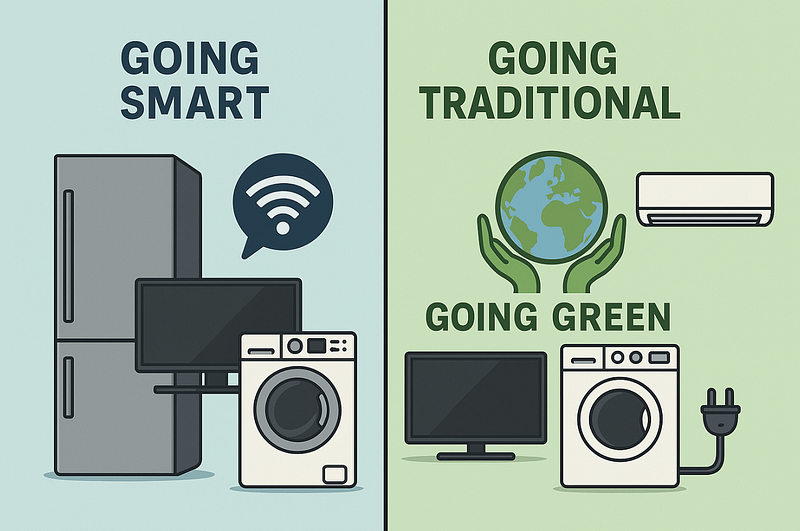
Should You Buy Smart or Traditional Appliances?
Smart vs. Traditional Home Appliances: Is DIY Repair the Key to Saving Money and the Planet?
Should You Buy Smart or Traditional Appliances?
When it’s time to replace a big-ticket home appliance — washing machine, air conditioner, fridge, or TV — many face the same question: Should you go smart or stick with the basics?
Smart appliances offer convenience, connectivity, and energy-saving insights. But that convenience comes at a price — higher upfront costs, shorter lifespans due to software dependencies, and complexity when something breaks.
Traditional appliances may lack high-tech flair, but they shine in long-term durability and DIY repairability. With fewer sensors, boards, and proprietary modules, they’re easier (and cheaper) to fix with basic tools and online tutorials.
DIY Repair Feasibility: 3–5 Years Later
Fast-forward a few years — most appliances will eventually falter. But can you fix it yourself?
- Smart Models: Repairs often involve proprietary components, diagnostics, and firmware. Even if a small part fails, you may need a certified technician or risk bricking the unit.
- Traditional Models: Common faults include worn belts, burned motors, or clogged valves — issues often solvable with a screwdriver, a YouTube video, and a $30 part.
E-Commerce: Your Repair Lifeline
Affordable DIY repair is now possible thanks to e-commerce. Sites like Amazon, AliExpress, and eBay stock:
- OEM and generic spare parts.
- Diagnostic tools and toolkits.
- Free video guides and forums for almost every appliance model.
This democratization of repair allows anyone with curiosity and patience to fix what breaks — without relying on costly service calls.
Repair Cost Comparison: USA Context
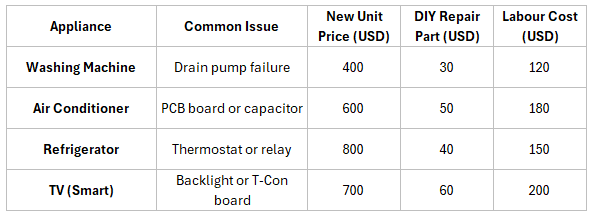
Here’s a breakdown of common issues, unit prices, and repair costs in the U.S.:
Why Labour Costs Push You Toward Buying New
In many cases, labor cost alone exceeds the value of the part by 2–3x. For instance, replacing a $40 fridge thermostat may cost $200–$300 just for the technician. It’s no wonder many opt to buy new.
But that creates a cycle of waste — perfectly repairable appliances end up in landfills.
The Greener Option: E-Commerce + DIY Repair
By sourcing parts and learning basic repairs:
- You save hundreds over the life of each appliance.
- Reduce electronic waste and carbon emissions.
- Gain independence from manufacturer lock-in and planned obsolescence.
In short, embracing DIY repair is not just cost-effective — it’s eco-responsible.
Repair Culture: A Greener Alternative to Consumerism
Modern consumerism thrives on planned obsolescence — products designed to fail or become outdated within a few years. Smart appliances, while convenient, often lock users into upgrade cycles driven more by software and ecosystem changes than actual hardware failure.
But repair culture pushes back.
Choosing to repair, reuse, and source your own parts via e-commerce isn’t just frugal — it’s a form of environmental activism. Every appliance you fix instead of tossing keeps valuable materials in use and prevents harmful e-waste.
The next time something breaks, ask yourself:
- Do I really need a new one?
- Or can I extend its life, save money, and reduce my environmental footprint?
Going green isn’t just about solar panels and recycling — it starts with our mindset around consumption.