2025-08-11_The-Labubu-Effect-eb934b58c2dc
Why a Tiny Toy is a Big Red Flag for Youth Finances
The Labubu Effect
Why a Tiny Toy is a Big Red Flag for Youth Finances
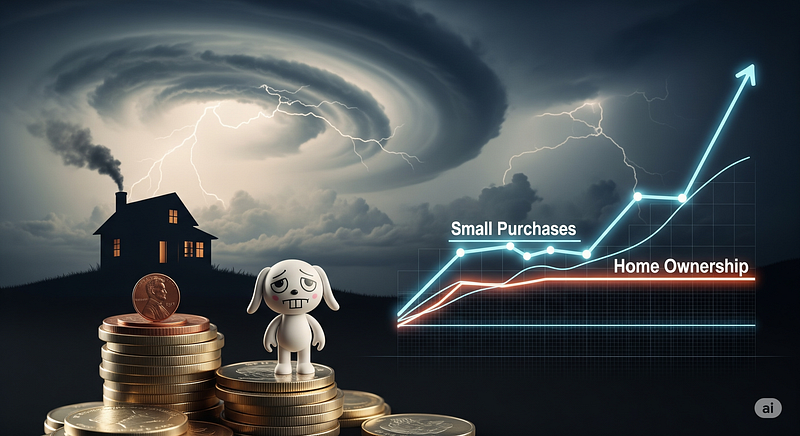
created by author via gemini
From celebrity handbags to viral TikToks, the “ugly-cute” Labubu collectible has exploded into a global phenomenon. These mischievous, jagged-grinned figurines from Chinese toymaker Pop Mart are more than just a passing fad; they’re becoming a modern-day “lipstick indicator,” revealing a deeper story about economic anxiety and the financial struggles of younger generations.
Labubu: The New “Affordable Luxury”
The “lipstick effect” theory suggests that during economic downturns, consumers opt for smaller, less costly luxuries instead of big-ticket items. Historically, this meant a surge in lipstick sales during recessions. Today, Labubu, with its modest price tag (standard blind boxes range from $8.99 to $27.99, though rare ones can fetch up to $170,000 at auction), fits this bill perfectly.
But Labubu’s appeal goes beyond simple indulgence. It’s a masterclass in “emotional consumerism,” offering “instant satisfaction” and a “dopamine hit” in a world that feels increasingly uncertain. The blind box model, with its element of surprise and the allure of rare “chase figures,” taps into the psychology of gambling, driving repeat purchases and fostering a sense of community and identity among collectors. For many young people, owning a Labubu is a “wearable badge of cool,” a “social flex,” and a “talisman” against economic precarity.
The Stark Reality: Housing Dreams Deferred
While a Labubu doll offers a fleeting sense of control, the reality of major life milestones, particularly homeownership, remains a distant dream for many young Americans. Let’s look at the numbers:
The median sales price of houses sold in the U.S. in Q2 2025 was approximately $410,800.
Now, consider the median annual incomes for younger generations in the U.S.:
- Gen Z (15–24 years old): $48,532 per year
- Millennials (25–34 years old): $58,500 per year
- Millennials (35–44 years old): $69,264 per year
To afford an average home in the U.S. ($410,800), a Gen Z individual earning the median annual salary ($48,532) would need to dedicate approximately 8.46 years of their entire income to housing. For a Millennial aged 25–34 ($58,500/year), this drops to about 7.02 years, and for a Millennial aged 35–44 ($69,264/year), it’s approximately 5.93 years. These figures don’t even account for down payments, interest, or essential living expenses, highlighting a “severely unaffordable” housing market for many.
Systemic barriers like high deposits, rising interest rates, and a persistent mismatch between affordable housing supply and demand further compound the problem. Nearly all millennials (97%) face barriers to homeownership, with 52% citing high home prices and 48% pointing to high interest rates as primary obstacles. This leads to delayed financial independence, postponed marriages and family formation, and an erosion of the traditional “American Dream” for many.
The Looming Financial Turmoil: “Doom Spending” and Debt Traps
The paradox is striking: while housing remains out of reach, spending on “affordable luxuries” thrives. This is partly driven by “doom spending,” a form of retail therapy where nearly half of Gen Z (49%) believes saving for the future is pointless. This “You Only Live Once” (YOLO) and “Fear Of Missing Out” (FOMO) mentality, amplified by social media, fuels impulsive purchases.
This behavior, coupled with aggressive marketing of easy credit, is contributing to an alarming rise in youth debt and bankruptcy in the U.S. Total bankruptcy filings increased 10% in the first half of 2025 compared to the same period in 2024, with individual filings up 11%. The student loan delinquency rate has more than tripled compared to pre-pandemic levels as of April 2025, with nearly 9 million loans currently delinquent. Buy Now, Pay Later (BNPL) platforms are a significant factor, projected to account for 9% of e-commerce purchase value in North America by 2025. A significant 66% of Gen Z (under 28) lead the way in BNPL usage, and over the past year, 51% of Gen Z users missed at least one BNPL payment, significantly higher than 41% of Millennials. BNPL interest rates can run as high as 36.99%.
Despite growing up with abundant financial information, young Americans often exhibit significant financial literacy gaps, making them vulnerable to these debt traps. The long-term consequences are dire: delayed life milestones, inadequate savings, and a precarious path to retirement security, potentially leading to increased reliance on social welfare.
Navigating an Uncertain Future
The Labubu trend, therefore, is not just about a cute toy; it’s a symptom of a generation grappling with profound economic anxieties. It highlights a critical tension between the immediate gratification offered by micro-luxuries and the arduous, often unattainable, path to major financial milestones.
Addressing this complex challenge requires a multi-pronged approach:
- Enhanced Financial Literacy: Integrating practical financial education into curricula, focusing on critical thinking and navigating digital finance.
- Housing Reforms: Expanding affordable housing schemes, reviewing mortgage criteria, and addressing supply-side constraints to make homeownership genuinely accessible.
- Regulatory Frameworks: Implementing robust regulations for emerging financial products like BNPL to protect vulnerable consumers from debt traps.
- Economic Opportunity: Fostering wage growth, investing in skill development, and supporting youth entrepreneurship to create a more enabling economic ecosystem.
- Mental Well-being Support: Recognizing and addressing the mental health impacts of financial stress through integrated counseling services.
Ultimately, the goal is to create an environment where “small luxuries” are a genuine choice for joy and expression, not a psychological substitute for the fundamental aspirations of a stable, secure, and prosperous future.