2025-03-27_Challenges-of-VR—AR-Glasses-for-Users-Over-40-2a41e04c09be
In today’s fast-paced world, multitasking has become second nature. We juggle emails during meetings, catch up on news while commuting, and…
Challenges of VR & AR Glasses for Users Over 40
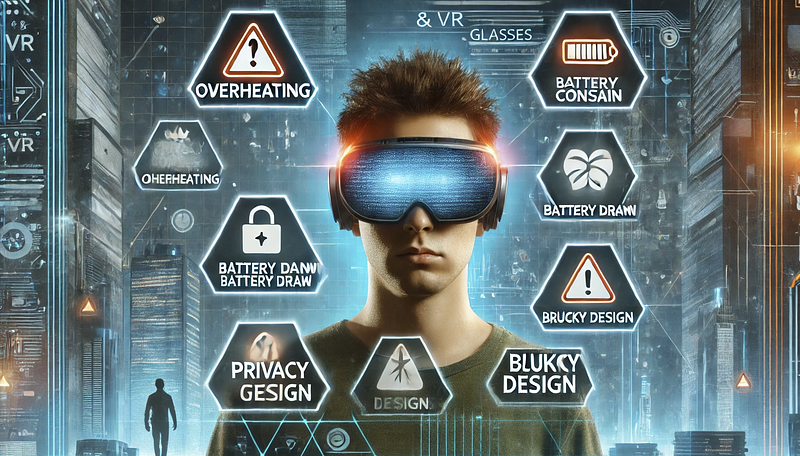
In today’s fast-paced world, multitasking has become second nature. We juggle emails during meetings, catch up on news while commuting, and even manage household chores while on conference calls. Enter Virtual Reality (VR) and Augmented Reality (AR) glasses — technologies promising to revolutionize our multitasking capabilities. But for individuals aged 40 and above, are these devices more of a hindrance than a help?
The Multitasking Mirage
Imagine trying to follow a cooking tutorial through AR glasses while preparing dinner. The promise is enticing: step-by-step instructions overlaid directly onto your kitchen counter. However, for many in the 40+ demographic, this seamless integration remains elusive due to common age-related vision conditions.
The Growing Prevalence of Vision Impairments
Vision impairments such as myopia and presbyopia are becoming increasingly common worldwide:
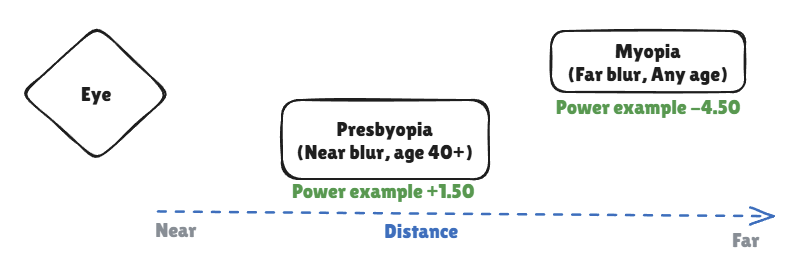
- Myopia (Nearsightedness): As of 2025, approximately 30% of the global population is affected by myopia. Projections indicate that by 2050, nearly 50% — equivalent to 5 billion people — will be myopic.
- Presbyopia (Age-Related Farsightedness): In the United States, the prevalence of presbyopia among adults aged 45 and older ranges from 83.0% to 88.9%, affecting nearly 90% of this age group.
These statistics underscore the widespread nature of vision impairments that can impact the effective use of VR and AR technologies.
Challenges of Combining Myopia and Presbyopia
For individuals over 40, the simultaneous presence of myopia and presbyopia presents unique challenges. Myopia affects distance vision, while presbyopia impairs the ability to focus on close objects. This combination complicates real-world multitasking and poses significant hurdles when adapting to VR and AR environments, where both near and far visual acuity are essential.
The Prescription Predicament
While prescription lens add-ons exist for VR and AR devices, they often fall short in addressing combined vision impairments effectively. Many of these add-ons are designed for standard vision corrections and may not cater specifically to the multifocal needs of users with both myopia and presbyopia. This oversight can lead to suboptimal visual experiences, causing frustration and diminishing the appeal of these technologies.
Limitations Due to Lens Size and Design:
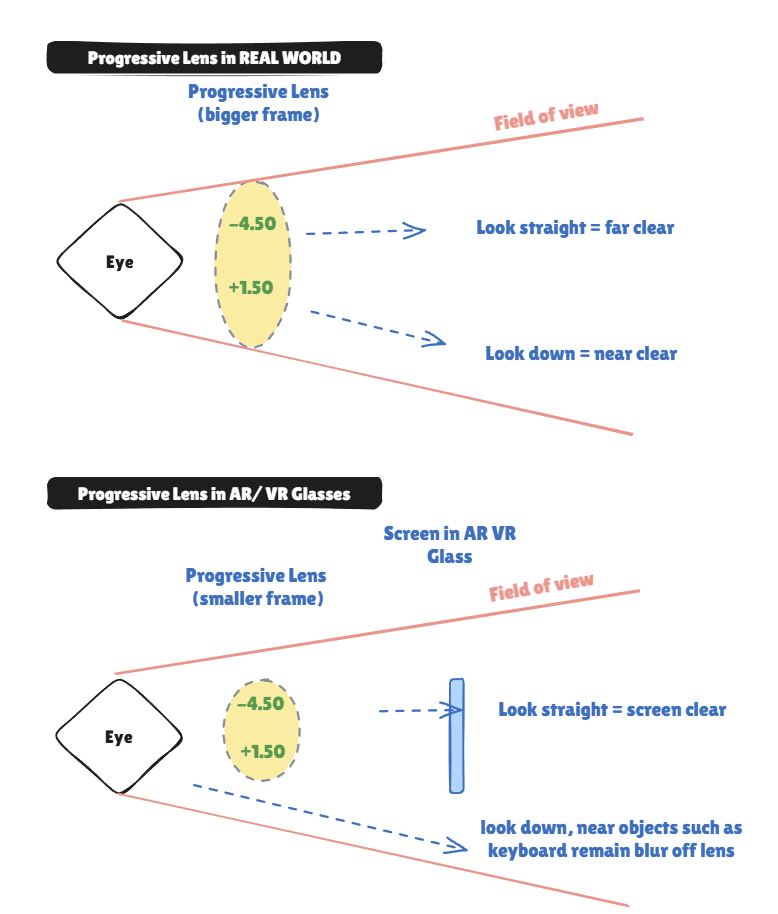
- Restricted Viewing Angle: Prescription lens inserts for AR glasses are typically smaller than standard eyeglass lenses, which can limit the field of view. This restriction can hinder the immersive experience that AR aims to provide.
- Ineffectiveness of Progressive Lenses: In traditional eyewear, progressive lenses allow wearers to view distant, intermediate, and near objects by shifting their gaze through different parts of the lens. However, in AR environments, virtual screens occupy the entire visual field, preventing users from tilting their heads or eyes downward to focus on near objects as they would in the real world. This limitation renders progressive lenses less effective in AR applications.
Form Factor and Comfort Concerns
Beyond vision issues, the physical design of VR and AR glasses poses additional challenges. The weight and bulkiness of current models can cause discomfort during extended use; wearing a hefty device on the face is far from appealing.
Tethered by Technology
Many VR and AR glasses require a wired connection to smartphones or other devices, limiting mobility and adding to the inconvenience. Moreover, not all smartphones are equipped with the necessary output capabilities for video transmission to these glasses, creating compatibility issues that further hinder adoption among older users.
The Road Ahead
For VR and AR glasses to gain traction among individuals aged 40 and above, manufacturers must address these multifaceted challenges:
- Vision Accommodation: Develop lens solutions specifically tailored for combined vision impairments, ensuring clear and comfortable viewing experiences.
- Ergonomic Design: Prioritize lightweight materials and ergonomic designs to enhance comfort during prolonged use.
- Wireless Integration: Advance wireless technologies to eliminate cumbersome cables, providing users with greater freedom of movement.
- Universal Compatibility: Ensure that VR and AR devices are compatible with a wide range of smartphones, regardless of output capabilities.
- Enhanced Multitasking Features: Implement functionalities that allow users to:
- Pin Screens in Virtual Space: Enable users to anchor virtual screens at fixed positions in their environment, simulating the experience of watching a stationary TV in the living room.
- Pin Screens at the Glasses’ Corner: Allow users to position essential information or applications at the periphery of their vision, ensuring consistent access without obstructing the main field of view.
By tackling these issues head-on, the tech industry can create VR and AR solutions that truly cater to the needs of the 40+ demographic, transforming potential doom into a realm of new possibilities.