2025-03-28_A-Must-Have-Printer-You-Didn-t-Realize-in-Today-s-Paperless-Society-cdb7b673dfb9
Introduction
A Must-Have Printer You Didn’t Realize in Today’s Paperless Society
Introduction
As we transition into a paperless society, physical printing has become less frequent. Many offices and households have stopped using traditional printers, and printing shops are becoming harder to find. However, there are still times when we need a printed document — whether for a child’s school assignment, a work schedule, or even a boarding pass. The dilemma arises: should you invest in an inkjet printer for occasional use, knowing the ink will dry up if unused for months? Or should you risk searching for a print shop every time the need arises?
Enter thermal printers — a compact, cost-effective, and maintenance-free alternative that ensures you have a reliable printing solution whenever required.
The Problems with Inkjet Printers
Inkjet printers have long been a household staple, but they come with significant downsides, especially for occasional users:
- Ink drying up: If an inkjet printer is unused for a long time, the ink cartridges dry up, requiring costly replacements.
- High maintenance: Frequent cleaning cycles waste ink and time.
- Bulky size: Many inkjet printers take up considerable space, adding clutter to home offices.
These issues make owning an inkjet printer impractical for users who print occasionally.
Why a Thermal Printer is a Better Alternative
Thermal printers use heat to print on special thermal paper, eliminating the need for ink or toner. Here’s why they are a great alternative:
- No ink required: No dried-up ink or clogged nozzles.
- Long-lasting paper storage: The paper remains blank until used.
- Affordable: Many thermal printers cost less than $100.
- Low operating cost: 200 A4 pages of thermal paper cost around $10 (approximately $0.05 per A4 print).
- Compact and portable: Small footprint compared to bulky inkjet printers.
Understanding Thermal Printers
Thermal printers work by using heat-sensitive paper that darkens when exposed to heat from the print head. This technology is commonly used in receipt printers, label makers, and, increasingly, home-use document printers.
Types of Thermal Printers
- Direct Thermal Printers: Use heat-sensitive paper that darkens when heated. These are the most common and cost-effective.
- Thermal Transfer Printers: Use a ribbon to transfer ink onto paper, offering better durability.
For casual home users, direct thermal printers are usually the best choice.
Examples of Thermal Printers
Unlike sponsored or affiliate reviews, this is a genuine recommendation based on experience. Some thermal printers you can find online include:
- 汉印官方打印机FT800 (Tmall Link)
- Mini Thermal Printer Bluetooth Portable (AliExpress Link)
- PeriPage A4 Paper Printer Thermal Transfer Printer (AliExpress Link)
My Experience with 汉印官方打印机FT800
I have been using the 汉印官方打印机FT800 for three years, and here’s my review:
Key Selection Criteria
- Wired connection to PC: Ensures it doesn’t interfere with Bluetooth connections to my phone.
- No built-in battery: I don’t need portability; I prefer larger paper rolls.
- Reliable brand/shop: Ensuring refill paper availability in the future.
Usage Expectations
- Paper quality: Thermal paper is slightly yellowish and glossy. Ink pens work better than pencils on it.
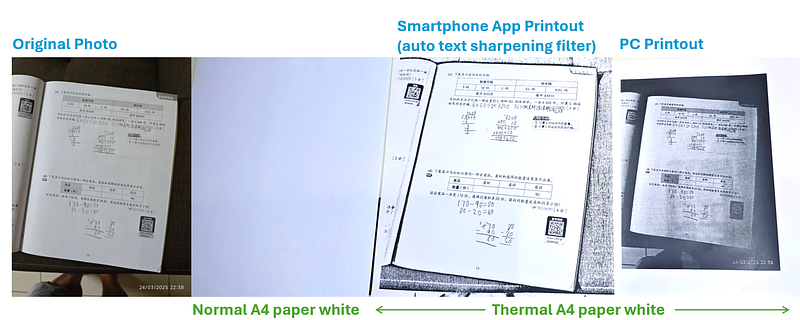
- PC printing: Basic driver, great for text but less suited for image printing.
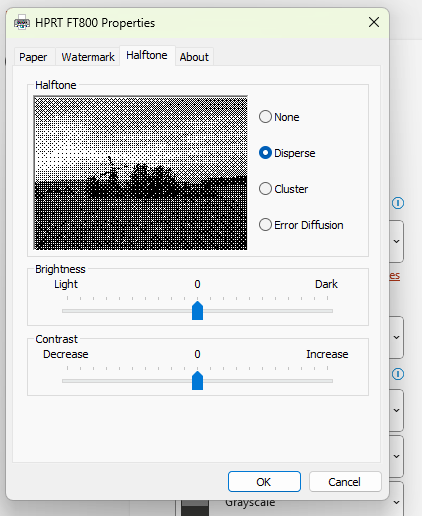
Smartphone printing: Feature-rich app with strong processing power for enhancing text clarity from images.
(below are image printing comparison, document docx printing has no different)
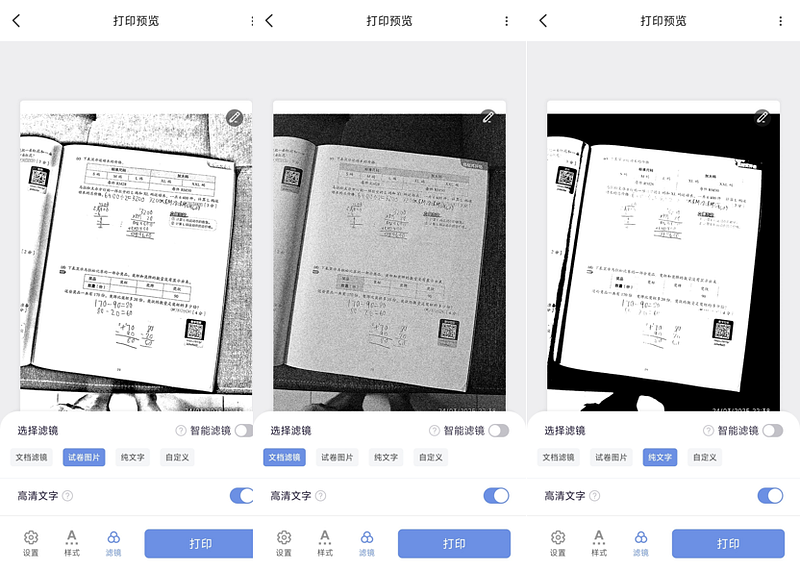
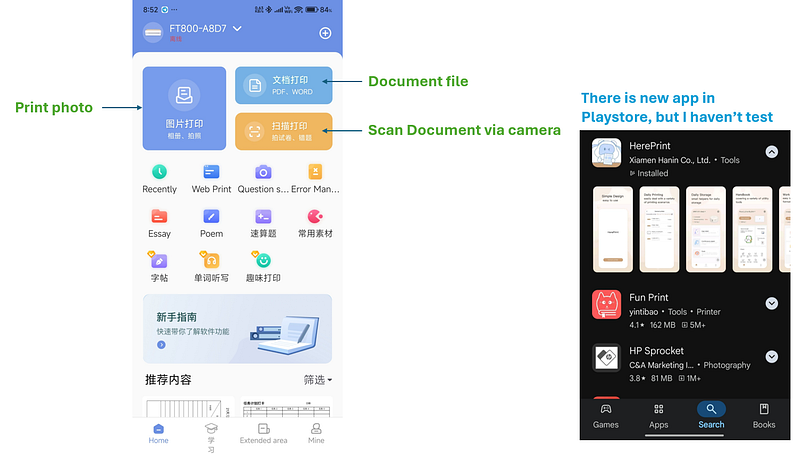
- 汉印官方打印机FT800 app: The app is in Chinese but usable in English. Some academic worksheets are available for children. (There is new English app in Play Store, but I haven’t test)
Final Thoughts
Thermal printers may not be the first option that comes to mind when thinking about home printing, but they offer a practical, cost-effective solution for occasional printing needs. If you find yourself in situations where a printed document is essential but don’t want the hassle of maintaining an inkjet printer, a thermal printer could be the perfect addition to your home setup.